

The Complete Guide to Shelf Ready Packaging Design for Retail (2026)
Your products are on the shelf, but are shoppers actually seeing them? In crowded Australian retail environments, the gap between “stocked” and “sold” often comes down to one thing: how your shelf ready packaging design performs at the point of sale. The right solution does more than hold your product. It protects during transit, speeds up replenishment in store and, importantly, turns packaging into a merchandising tool.
This guide covers everything you need to know about choosing shelf ready packaging solutions for retail, from structural design principles to material selection, replenishment efficiency to sustainability. As a leading packaging manufacture with decades of experience, Abbe can design and manufacture packaging solutions that combine transit protection with on-shelf presentation, helping brands and retailers get more from every centimetre of shelf space.
Key Takeaways: Shelf Tray Design for Retail
- Shelf Ready Packaging combines shipping protection with retail display, reducing handling and replenishment time in store.
- Structural design factors like tray depth and perforation placement directly effect on-shelf product visibility.
- Corrugated cardboard trays are fully recyclable, biodegradable and compostable, supporting your sustainability targets.
- Abbe designs custom packaging with in-house structural engineers, matching each solution to your product and retailer requirements.
- Choosing the right tray format can reduce restocking labour and improve category performance across supermarkets and pharmacies.
What is Shelf Ready Packaging?
Shelf Ready solutions are retail-ready packaging formats manufactured from corrugated cardboard that serve a dual purpose: protecting products during transport and presenting them directly on store shelves without the need for unpacking or manual stacking.
In practice, shelf ready packaging acts as the shipper and the on-shelf tray, with retail staff simply removing a perforated panel or tear strip before stocking the product, without any additional manual stacking or handling. This eliminates the time-consuming process of individually placing items, which not only saves time, but ensures products are presented in a controlled manner.
Shelf ready packaging is common in supermarkets, pharmacies, convenience stores and other retail environments. They are used across categories including food and beverage, confectionery, health and beauty, household goods and consumer electronics.
Why Packaging Design Matters for Product Visibility
Shelf space in Australian retail is highly competitive. Your product may sit alongside several alternative products, and shoppers make purchasing decisions in seconds. Well-designed packaging positions your product at the optimal viewing angle, keeps your branding front-facing and ensures a tidy appearance regardless of stock levels.
Designs that are not carefully considered can hide your, obscure your branding or cause items to slide and shift. The result is reduced shopper engagement, slower sales velocity and increased labour to re-face shelves.
Research published in the Journal of Marketing (2026) found that point-of-sale advertising and product visibility at the shelf increases purchase likelihood. Your packaging design plays a direct role in creating that visibility at the moment of decision.
How Shelf Ready Packaging Reduces Replenishment Time
One of the strongest operational arguments for shelf ready packaging solutions is speed of replenishment, in fact some retailers require products to be delivered in this format. Traditional packaging requires staff to unpack cases, remove individual items and arrange them on shelves. Shelf-ready trays make replenishment significantly more efficient.
A 2025 UK pilot study by Colton Packaging found that corrugated shelf-ready packaging reduced shelf restocking time by up to 45%. That translates directly to lower labour costs and more consistent product availability for shoppers.
For retailers managing tight staffing budgets, this efficiency gain is significant. When replenishment is faster, shelves stay fuller, products are better presented and spend more time visible to customers.
Structural Design Principles for Effective Shelf Ready Packaging
The structural design of your shelf ready packaging influences everything from transport performance and product protection to on-shelf presentation. Getting the details right at the design stage prevents problems in your supply chain.
Tray Depth and Wall Height
Tray depth needs to balance two competing priorities: protecting products during transport and maximising product visibility on the shelf. Walls that are too high obscure the product and branding. Walls that are too low risk items falling out during handling.
Perforation and Tear-Strip Placement
Perforations determine how the tray transitions from a transport shipper to a retail display tray. Clean, well-positioned perforations allow store staff to open the tray quickly, without damaging the packaging or leaving ragged edges that look untidy on the shelf.
There also are a range of perforation types that will affect how effectively the packaging can transition from shipper to tray without quality issues, and packaging production needs to be consistent over time. Consistent perforation quality across your production runs ensures every tray looks the same when displayed in-store.
Flute Type and Board Grade
The corrugated flute profile that is selected affects a range of performance factors, including stacking strength, cushioning and print quality. B flute (approximately 3mm) is commonly used in shelf ready packaging because it offers good burst strength and a smoother surface for printing. E flute (approximately 1.5mm) works well for lighter products and delivers even sharper print results.
For heavier products or palletised transit, a twin-cushion construction combining B and C flute are also available.
Types of Shelf Ready Packaging Formats for Retail
There is no single packaging format that works for every product or retail environment. The format you choose should match your product dimensions, weight, category position, supply chain and retailer requirements.
Wrap-Around Shelf Trays
Wrap-around trays are formed by wrapping a single piece of corrugated board around the product group. They provide strong transit protection and convert to a clean display by removing the top and front panels. This format can work well for rectangular products such as beverage multipacks and boxed food items.
Die-Cut Display Trays
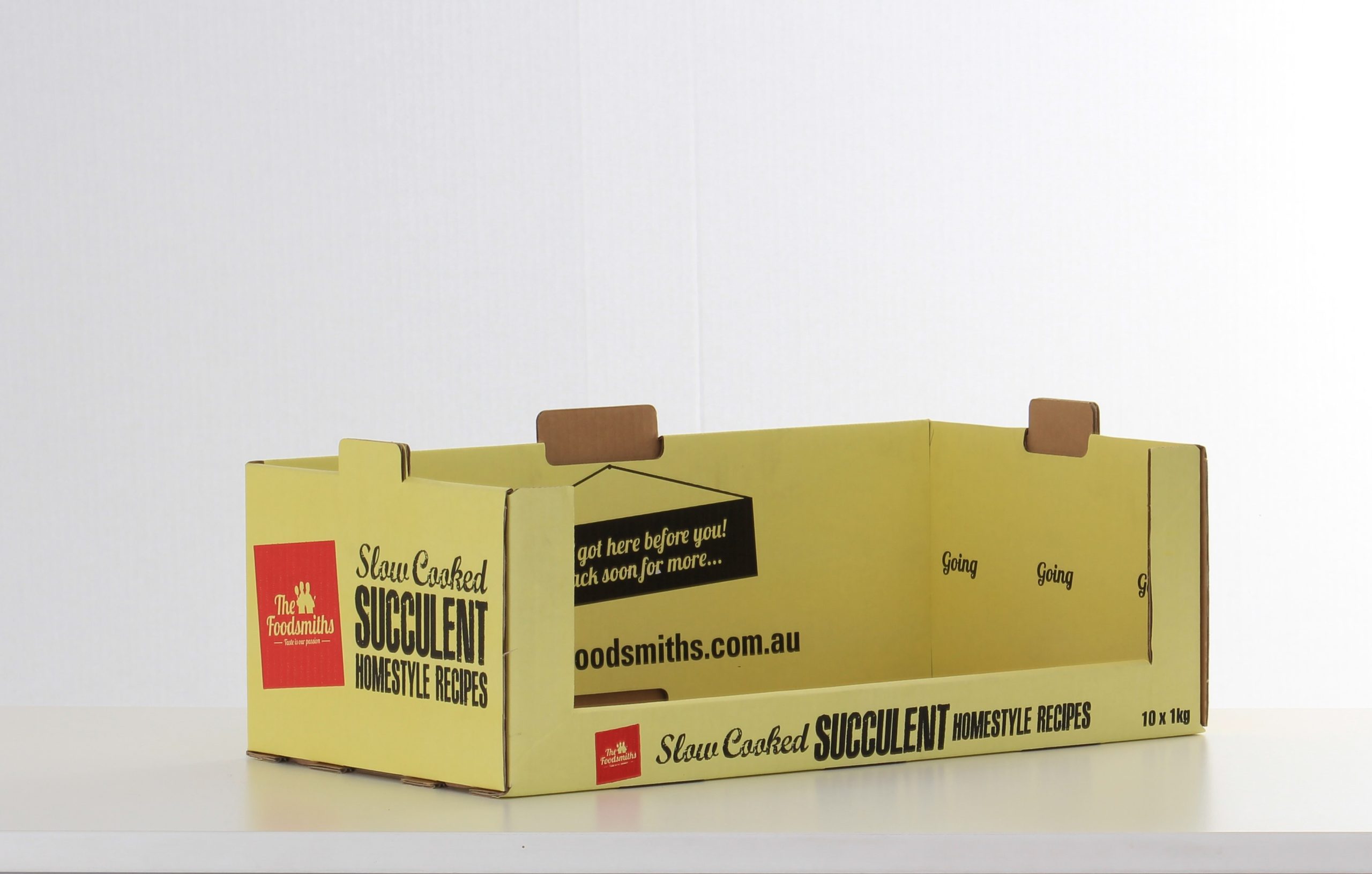
Die-cut trays are custom designed to fit your product exactly. They can incorporate features like angled fronts, integrated shelf lips and header panels for additional branding. Abbe produces die-cut packaging designed to maximise shelf presence while maintaining structural integrity during handling.
Stackable Shelf Trays
Stackable trays are designed for products that need to be displayed in tiered arrangements. They feature interlocking bases and lids that allow secure vertical stacking, making them suitable for categories where floor space is limited and vertical merchandising is preferred.
Creased and Slotted Trays
Creased trays feature a flat base sealed on all four corners, offering enhanced compression strength. Abbe’s cardboard tray range includes both creased and slotted variants that work as standalone displays or as bases for secondary packaging.
How to Choose the Right Ready Packaging for Your Products
Selecting the right packaging format starts with understanding your product, your retail environment and your supply chain requirements. Here is a practical framework for making that decision.
Step 1: Define Your Product Dimensions and Weight
Start with the basics. Measure your product’s height, width and depth. Note the weight of a full tray load. These figures help determine the minimum board grade, flute type and tray wall dimensions that will be required.
Step 2: Understand Your Retailer’s Shelf Configuration
Different retailers have different shelf depths, bay widths and height restrictions. A tray designed for a supermarket gondola shelf may not fit a pharmacy’s narrower shelving. Confirm the shelf dimensions before committing to a tray design.
Step 3: Determine Your Branding and Visibility Requirements
Consider how much of the tray surface will be visible once placed on the shelf. Front panels and side panels are your primary branding zones. If your category is visually competitive, investing in high-quality print, whether flexographic or digital printing, can give you a stronger presence.
Step 4: Consider Transport and Stacking Requirements
Your packaging needs to survive the journey from manufacturing plant to store shelf. Consider pallet stacking heights, transport conditions and how many handling touchpoints your product passes through. A tray collapses during transport can damage products, impact shelf presence and reflect poorly on your brand.
Step 5: Consult a Packaging Specialist
The variables involved in packaging design are numerous, and the interaction between them matters. Working with a specialist packaging manufacturer ensures the right solution for your specific product. Abbe’s in-house design team can prototype and test designs before production, so you can see exactly how the finished product will look and perform.
Printing and Branding on Shelf Ready Packaging
Your Shelf ready packaging is not just a container. It’s a branding opportunity. On a crowded retail shelf, the tray itself becomes your billboard, communicating your brand identity, product information and promotional messaging directly to shoppers.
Flexographic printing is the standard for high-volume corrugated packaging. It delivers consistent colour reproduction at speed and is well-suited for bold brand graphics. For shorter runs or SKU-specific messaging, digital printing offers high-quality colour reproduction without the setup costs of plate-based processes.
Abbe operates single-pass digital printing direct to corrugated board, which makes it practical to produce region-specific, seasonal or promotional tray designs at competitive volumes. This flexibility means you can tailor your shelf presence to different retail channels without committing to a single design across all stores.
Sustainability Considerations for Shelf Ready Packaging in Australia
Sustainability is no longer optional in Australian retail packaging. Retailers, regulators and consumers all expect packaging to have a low environmental footprint, and corrugated cardboard packaging delivers on that expectation.
Corrugated cardboard is made from a renewable natural resource. It’s fully recyclable through existing kerbside collection systems, biodegradable and compostable. This makes it one of the most circular packaging materials available in the Australian market.
Abbe holds FSC and PEFC certifications, ensuring that the raw materials used in its corrugated products come from responsibly managed forests. The company is also a SEDEX member, demonstrating a commitment to ethical and responsible practices across labour, health and safety, environmental and business ethics standards.
By choosing corrugated shelf ready packaging, you are also reducing secondary packaging waste because the shipper carton and the retail display are one and the same..
How Shelf Ready Packaging Improves Point-of-Sale Performance
Point-of-sale performance is ultimately about converting shelf presence into purchases. The right packaging solution can contribute to this in several practical ways.
First, by maintaining a consistent, fully faced product display.. As shoppers pick items from the tray, remaining products stay upright and aligned, avoiding the “ransacked shelf” appearance that discourages further purchases.
Well designed shelf ready packaging creates a mini billboard effect on the shelf. Your brand’s colours, logo and messaging are visible not just on the product itself but on the surrounding packaging, reinforcing brand recognition at the critical moment of decision. Abbe’s retail-ready packaging solutions are engineered to maximise this shelf impact while meeting the practical demands of the supply chain.
Common Mistakes to Avoid in Shelf Tray Design
Even experienced packaging buyers can overlook key requirements when specifying packaging production. An experience packaging manufacturer can help ensure you avoid these common errors, saving time, money and brand reputation.
Over-Engineering the Structure
Using heavier board grades or more complex constructions than your product requires adds unnecessary cost and material. Match the packaging specification to the actual demands of your product weight, transit conditions and shelf environment.
Ignoring Retailer Specifications
Major Australian supermarkets have specific requirements for shelf-ready packaging dimensions, perforation style and labelling. Designing a packaging without confirming these specifications can result in rejected shipments or products poorly positioned on-shelf
Prioritising Aesthetics Over Functionality
A tray that looks visually striking but is difficult for staff to open, does not stack properly or fails to protect the product during transit can create more problems than it solves. Functionality and appearance need to work together.
Neglecting the Unboxing Experience for Staff
Store staff interact with your packaging every day. If your tray is awkward to open, leaves cardboard debris or requires tools to set up, it will slow down replenishment and create a negative association with your brand in-store.
How Abbe Approaches Packaging Design and Manufacturing
Abbe brings over 35 years of corrugated packaging expertise to every packaging project. The process starts with understanding your product, your retail environment and your operational requirements.
Our in-house design studio, SandBox, includes both structural and graphic design services, along with offering prototypes for testing before committing to production.
From concept through to manufacturing and delivery, Abbe handles the entire process in-house. This means faster turnaround, consistent quality and a single point of contact for your packaging needs. With fast lead times and manufacturing facilities across Victoria, New South Wales, we supply businesses throughout Australia.
We work with FMCG brands, retail chains, food manufacturers and agricultural producers to develop shelf ready packaging solutions that perform in the real-world conditions of Australian retail. If you are looking for a packaging partner who takes the time to understand your specific challenges, one of our packaging specialists is ready to help.
Choosing the Right Shelf Tray for Your Retail Goals
Shelf Ready Packaging sits at the intersection of logistics, merchandising and brand communication. The right solution protects your product, speeds up store operations and gives your brand a stronger presence on crowded shelves. By understanding the structural, visual and operational factors covered in this guide, you can make more informed packaging decisions that deliver results at the point of sale.